
Featured Industrial Poles & Solar Luminaires (Series 01–08)
Factory-direct structural steel infrastructure and high-efficiency photovoltaic lighting systems engineered to exact project wind ratings, soil load profiles, and international photometric parameters.


Full Series Conical & Octagonal Municipal Street Light Poles



Macro Trends in Global Commercial & Municipal Outdoor Lighting Infrastructure
The international municipal lighting sector has reached an inflection point. The global transition away from legacy high-pressure sodium (HPS) and metal halide fixtures toward intelligent solid-state LED systems is now colliding with widespread grid decarbonization mandates, aggressive municipal electrification budgets, and high-resilience off-grid requirements across emerging markets.
Decarbonization & Grid Independence
Municipal authorities throughout Africa, Southeast Asia, Central Asia, and Latin America are increasingly specifying standalone solar lighting architectures to circumvent unreliable national utility grids, eradicate trenching and cabling civil works, and eliminate recurring municipal utility liabilities.
- Zero cabling trenching capex reduction (40–60% savings)
- Complete immunity against utility blackout / load-shedding
IoT Smart City Densification
Urban arterials across Europe, the Middle East, and North America are transitioning from passive illumination poles to multi-sensor edge computing nodes. Modern street lighting poles serve as shared carriers for 5G micro base stations, environmental sensors, AI surveillance, and EV charging.
- NEMA 7-pin and Zhaga Book 18 standardized sockets
- LoRaWAN, NB-IoT, and 4G smart dimming integration
Structural Resilience & Severe Weather
With the increasing frequency of super-typhoons, extreme sandstorms, and coastal salt fog exposure, EPC contractors can no longer rely on commercial-grade light-duty poles. Structural calculations under AASHTO and EN 40 standards for high dynamic wind pressures have become mandatory qualification gates.
- Structural engineering designed for 160–240 km/h wind gusts
- Heavy-wall Q355B yield strength steel forming
Why Gaoyou, Jiangsu Commands Over 70% of Global Pole & Solar Street Light Exports
Gaoyou, situated in the Yangtze River Delta manufacturing corridor of Jiangsu Province, is globally recognized as the definitive epicenter of outdoor lighting and steel pole manufacturing. Yangzhou Xintong Traffic Equipment Group leverages this complete industrial ecosystem to deliver unprecedented economies of scale, total process control, and unmatched export speed.
Complete Upstream Integration
Direct bulk procurement of certified Q235B and Q355B hot-rolled coil steel from state-owned mills (Baosteel, Shagang) guarantees mill test certification (MTR) traceability, consistent chemical composition, and superior bend ductility without micro-fracturing.
16-Meter CNC Tandem Press Brakes
Single-seam automated hydraulic tandem bending lines press continuous tapered shafts up to 16 meters in a single stroke. This eliminates circumferential transverse welds, creating monolithic structural integrity with superior fatigue endurance.
Continuous In-House Galvanizing
Owning our 14-meter continuous hot-dip galvanizing kettles eliminates intermediate trucking delays and third-party quality compromises. Fully automated pre-treatment pickling, fluxing, and molten zinc immersion ensure uniform zinc diffusion layers.
Component Supply Ecosystem
Proximity to Tier-1 solar cell fabricators, Bridgelux and Lumileds LED packaging centers, and CATL-grade lithium iron phosphate (LiFePO4) cell producers reduces component freight times to hours, securing tender delivery schedules against global disruptions.
Engineered Solutions for Extreme Climatic & Civil Environments
Standard commercial catalogue specifications inevitably fail when deployed in specialized environments. Our export engineering department tailors metallurgy, structural wall thickness, solar battery chemistry, and optical distributions to local micro-climates.
Coastal Marine & Port Facilities (C5-M)
High atmospheric chloride concentrations and wave spray rapidly destroy standard galvanized surfaces. We engineer dual-layer protection systems: hot-dip galvanizing per ASTM A123 (minimum 100 μm thickness) followed by an electrostatic polyurethane fluorocarbon barrier, accompanied by 316 stainless steel fasteners.
- ISO 12944 C5-M high-salinity rating
- IP67 hermetic electrical enclosures
Arid Middle East & North Africa Deserts
Solar luminaires in GCC and Saharan environments face ambient temperatures exceeding 50°C and severe abrasive sandstorms. We incorporate high-thermal-stability grade-A LiFePO4 cells with smart BMS heat-throttling algorithms, self-cleaning hydrophobic tilted glass PV surfaces, and IP66 sand-tight optical chambers.
- Operating temperature tolerance: -20°C to +65°C
- Sand-abrasion resistant powder coating
Sub-Zero High-Latitude Winter Corridors
Installed throughout Central Asian steppes (Kazakhstan, Kyrgyzstan) and Northern Europe, systems must withstand temperatures down to -40°C, heavy radial ice loads, and low solar irradiance. Split-type high-tilt systems utilize low-temperature electrolyte batteries with internal thermal insulation wrap.
- Low-temperature discharge efficiency > 85% at -30°C
- Heavy ice-load structural shaft reinforcement
Highways & Multi-Tier Interchanges
Expressways demand precise optical cutoffs to eliminate driver glare (TI < 10%) while achieving high overall uniformity (Uo ≥ 0.40) and longitudinal uniformity (Ul ≥ 0.70). For broad interchanges, 20m–40m high mast towers with motorized lowering winches allow ground-level crew maintenance.
- EN 13201 Class M1 to M3 roadway compliance
- Internal motorized safety winch systems
Structural, Photometric & Anti-Corrosion Engineering Standards
Every tender specification reviewed by Xintong undergoes structural calculations and optical simulations before steel is cut. Below is an engineering overview of our compliance frameworks.
Structural Wind Load Modeling
Finite Element Analysis (FEA) is conducted to verify deflection limits, base plate stresses, and anchor bolt shear strengths in accordance with AASHTO Standard Specifications for Structural Supports for Highway Signs, Luminaires, and Traffic Signals and EN 40-3-3.
- Verification against gust factor response coefficients
- Minimum safety factor of 2.5 across dynamic loads
DIALux evo Photometrics
We design bespoke IES/LDT photometric files tailored to each road profile, pole setback, and spacing distance. This ensures optimal roadway luminance (cd/m²), illuminance (lux), and overall uniformity ratio without over-specifying luminaire wattage or causing light pollution.
- DIALux 3D submittal calculation reports
- Type II, Type III, and Forward-Throw bat-wing optics
Metallurgical Galvanization
All pole shafts, access doors, brackets, and base plates undergo full-immersion hot-dip galvanizing strictly complying with ISO 1461 and ASTM A123. Molten zinc bath temperatures maintained at 450°C create gamma, delta, and zeta zinc-iron metallurgical alloys.
- 86 μm to 120 μm typical dry film thickness (DFT)
- Guaranteed 25+ years rust-free exterior lifecycle
| Evaluation Parameter | Xintong Heavy Manufacturing Protocol | Commodity Fabricators & Trading Middlemen |
|---|---|---|
| Steel Raw Material | Q235B / Q355B Traceable Mill Certified Full chemical and physical property mill certs supplied. | Uncertified secondary steel scrap with variable silicon content and yield instability. |
| Shaft Longitudinal Welding | Automated Submerged Arc Welding (SAW) Full penetration, zero porosity, ultrasonic NDT tested. | Manual CO2 shielded tack welding, partial penetration prone to fatigue cracking under wind vibration. |
| Galvanizing Thickness | ≥ 86–100 μm (ASTM A123 / ISO 1461) Internally and externally coated in single continuous dip. | Sub-standard 40–50 μm flash dipping; pinholes and rapid inner wall oxidation within 24 months. |
| Solar Energy Storage | Automotive Grade-A LiFePO4 (≥ 3000 Cycles @ 80% DoD) Active balance smart BMS with dual low/high temp cutoffs. | Repurposed B-grade or used EV ternary lithium / lead-gel batteries prone to sudden thermal failure. |
| Photometric Verification | Custom DIALux evo Simulations Project-specific IES files provided for engineer-of-record tender review. | Generic lumen estimates without optical distribution files, resulting in dark roadway patches. |
| Tender Qualification Files | Complete Dossier Provided CAD blueprints, calculation sheets, MTRs, galvanizing inspection, and CE/ISO certs. | Generic marketing leaflets; unable to satisfy strict municipal tender submission requirements. |
Technology Trends Shaping the Next Decade of Industrial Lighting
As municipal infrastructure modernizes, street lighting poles and autonomous solar fixtures are evolving from standalone illuminating fixtures into connected, high-efficiency, multi-function urban assets.
N-Type TOPCon & Bifacial Solar
Transitioning from legacy PERC cells to N-type TOPCon monocrystalline cells boosts module conversion efficiency beyond 22.8%. Vertical wrap and dual-sided panels capture ground albedo reflection, increasing energy harvest by 15–25% in dusty and snowy regions.
AI-Driven Predictive MPPT Dimming
Our fourth-generation smart MPPT controllers continuously track maximum power points at 99.5% efficiency. Machine learning routines evaluate rolling 72-hour weather histories and remaining battery capacity to dynamically throttle nighttime dimming profiles.
Smart City 5G Multifunctional Poles
Urban centers are combining street lighting, traffic signal systems, security cameras, public Wi-Fi, air quality monitors, and digital signage onto a single integrated pole structure. Internal wire routing channels and isolated voltage compartments prevent electromagnetic interference.
Low-Carbon & Circular Economy Steel
In support of global ESG procurement directives, Xintong offers steel poles manufactured utilizing electric arc furnace (EAF) low-carbon steel processes. Combined with 100% recyclable structural steel and long-life modular LED gear trays, our infrastructure minimizes embodied lifecycle carbon.
Delivered on Strategic Seaports, Expressways & Municipalities
From deepwater container terminals in Southeast Asia to desert surveillance networks in the Arabian Peninsula, Yangzhou Xintong Traffic Equipment Group fulfills complete project requirements on time and within budget.
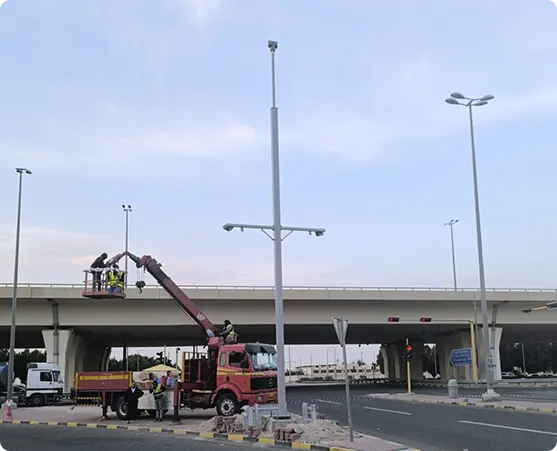
Maritime Terminal 25m–30m High Mast Lighting
Engineered polygonal high mast structures with motorized raising-and-lowering systems to illuminate 24/7 container handling aprons. Structural engineering certified for Category-5 typhoon wind speeds with ISO 1461 hot-dip galvanizing for harsh marine exposure.
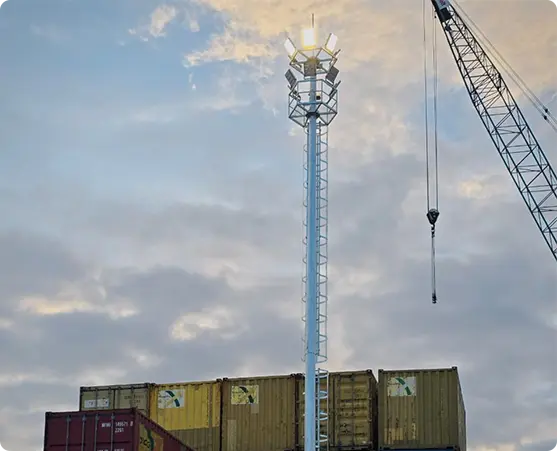
Extreme Desert CCTV Traffic Monitoring Poles
Fabricated reinforced steel octagonal camera and radar mast poles designed to dampen low-frequency wind-induced oscillation, ensuring vibration-free optical transmission in high-temperature, sand-laden environments.
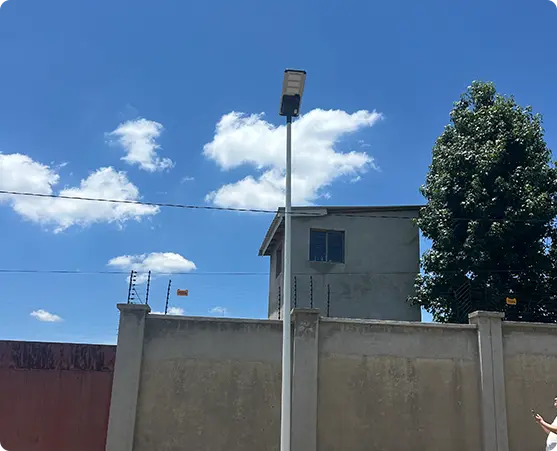
7-Meter 60W Integrated Autonomous Solar Systems
Supplied over 3,500 units of all-in-one solar street luminaires across township arterial roads. The autonomous battery and PV setup provided continuous illumination through extensive municipal grid load-shedding cycles.
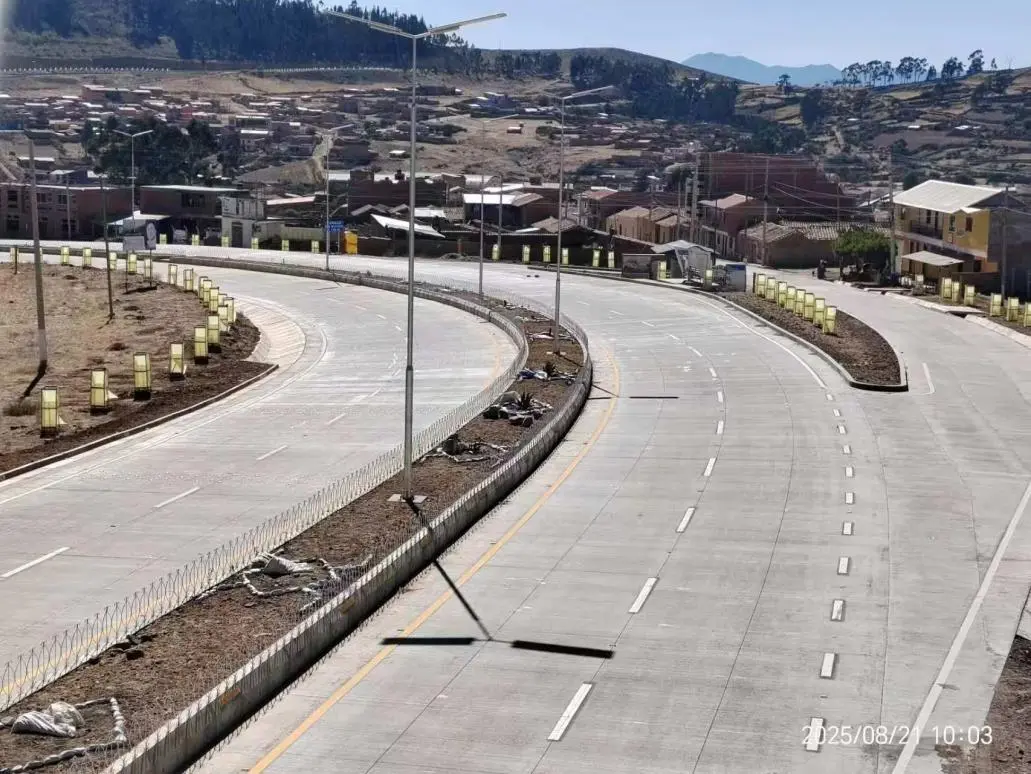
Port Logistics Corridor Solar Infrastructure
Designed and delivered high-wattage autonomous solar street lighting poles along the municipal heavy haul arterial connecting the Pan-American Highway to Peru's new deepwater maritime logistics terminal.
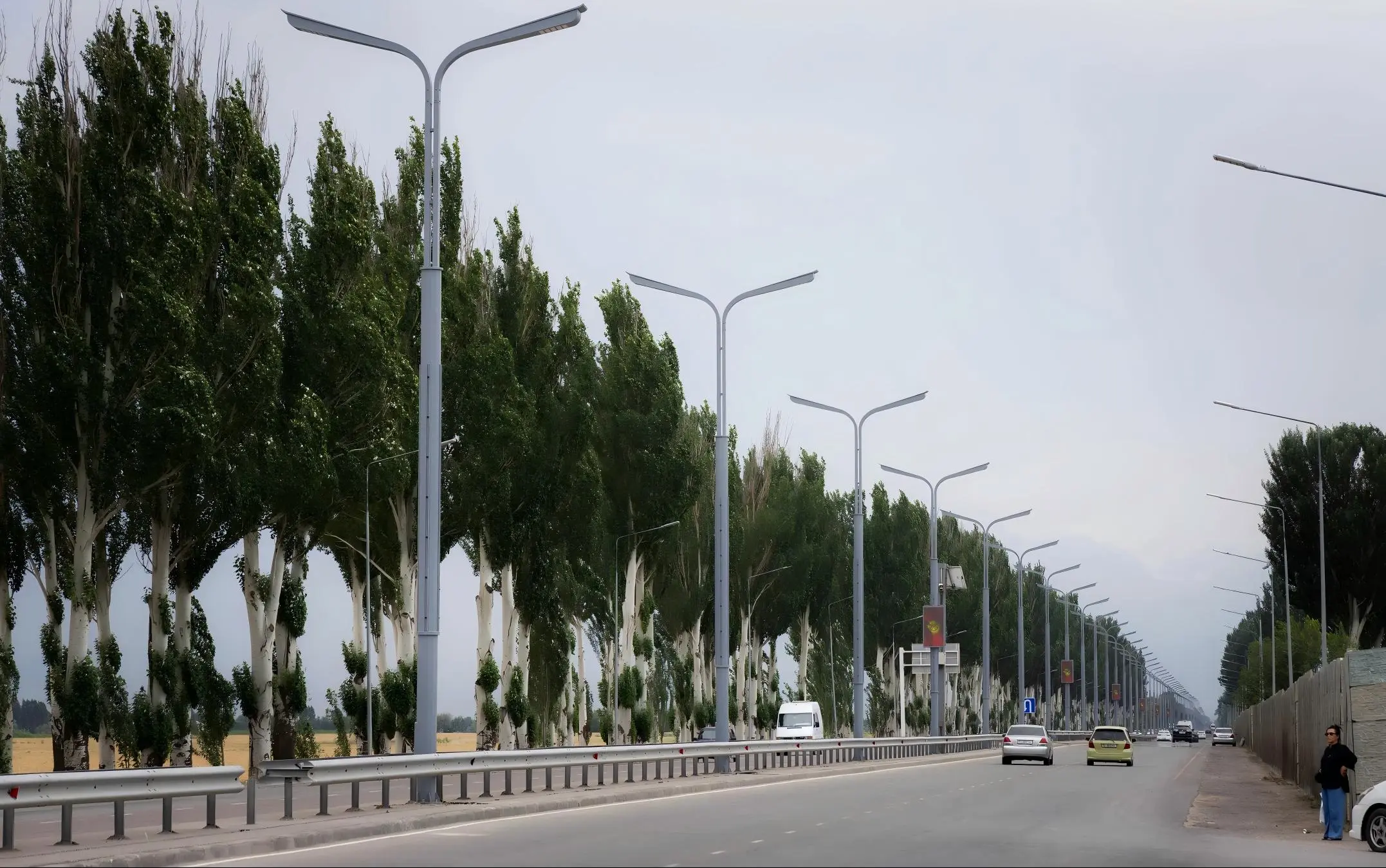
Manas International Airport Expressway Lighting
Fabricated double-arm hot-dip galvanized conical steel poles engineered to operate continuously through harsh Central Asian sub-zero winters, delivering EN 13201 Class M1 road lighting uniformity.
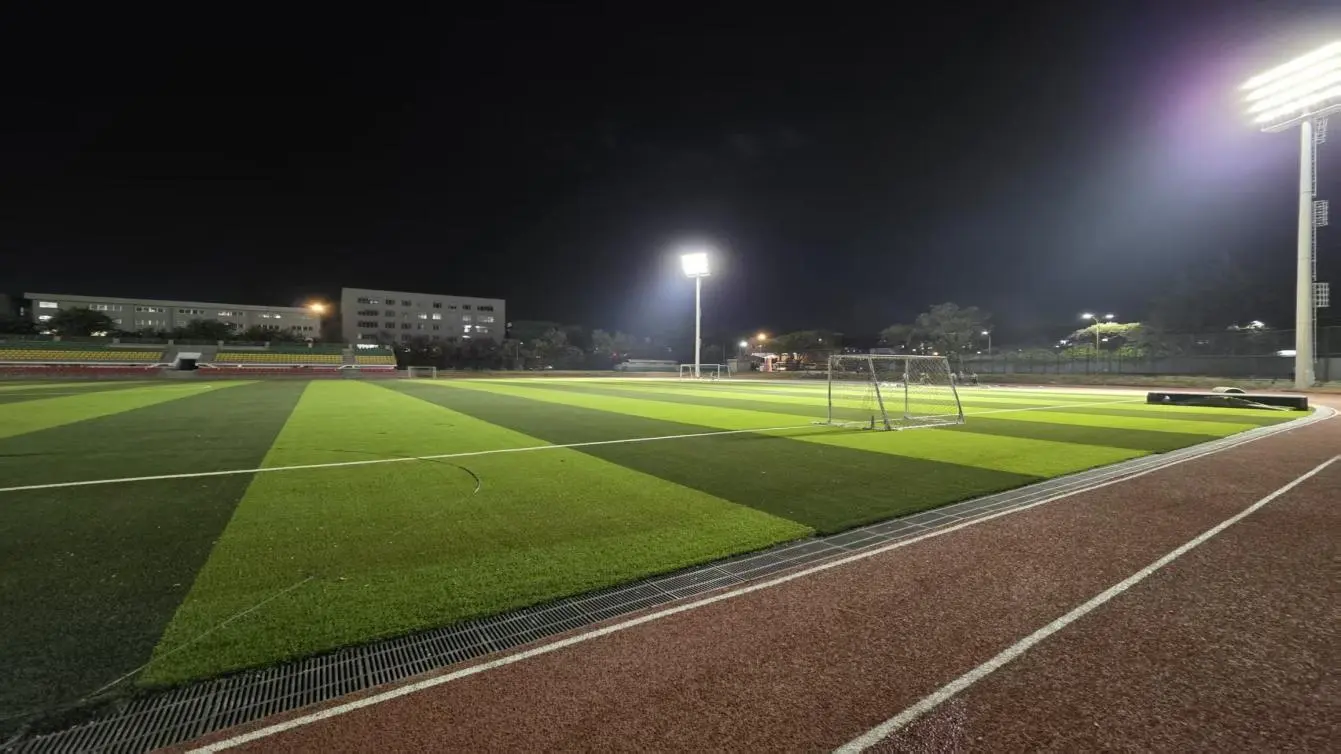
Stadium & Athletics Arena High Mast Floodlighting
Constructed 35m polygonal high-mast floodlight towers with symmetrical crown head-frames, positioned according to comprehensive DIALux aiming plots for competition broadcast lighting levels.
Global Procurement Checklist: How EPCs Evaluate Chinese Pole Manufacturers
Procurement directors and civil engineering consultants face significant financial and performance liabilities when sourcing lighting infrastructure overseas. Below is an engineering checklist for evaluating factory qualifications prior to placing purchase orders.
1. Raw Material Verification (MTR)
Demand EN 10204 Type 3.1 Mill Test Certificates verifying that incoming steel coil matches the specified carbon, manganese, phosphorus, and silicon percentages. Silicon content must remain below 0.04% or between 0.15%–0.25% (Sandelin curve) to guarantee a smooth, adherent galvanized zinc finish.
2. Weld Integrity & NDT Reports
Examine whether the manufacturer utilizes automatic submerged arc welding (SAW) and performs Non-Destructive Testing (NDT). Structural tenders require ultrasonic testing (UT) and magnetic particle testing (MT) of longitudinal weld seams and base-plate gusset connections.
3. Solar Sizing & Autonomy Metrics
Do not accept generic wattage claims. Sizing calculations must include peak sun hours (PSH) based on NASA/Meteonorm datasets for the exact project coordinates, worst-month solar declination, battery depth of discharge (DoD ≤ 80%), and a minimum of 3 to 5 continuous rainy autonomy days.
Frequently Asked Technical & Procurement Questions
Clear, definitive answers to the structural, photovoltaic, and export compliance questions most frequently asked by municipal authorities and EPC contractors.
Are you a direct manufacturing plant or an export trading intermediary?
Yangzhou Xintong Traffic Equipment Group is a direct manufacturer established in 1999. We own and operate a 100,000 m² heavy production campus in Guoji Industrial Concentration Area, Gaoyou, Jiangsu, China. Our facilities include 7 specialized workshops covering heavy coil uncoiling, single-stroke CNC hydraulic tandem pressing, submerged-arc welding, automated hot-dip galvanizing, electrostatic powder coating, and dust-free LED/solar assembly. Clients are welcome to conduct on-site factory audits or independent third-party inspections (SGS, TÜV, Bureau Veritas).
What structural design codes and wind load calculations do your poles comply with?
Our engineering department designs poles to meet European standard EN 40 (Parts 1–5), American standard AASHTO Standard Specifications for Structural Supports for Highway Signs, Luminaires, and Traffic Signals, and British Standard BS 5649. For every municipal or highway project, we calculate bending moment distributions, shear forces, base plate thicknesses, and anchor bolt sizing based on the project's specific local 50-year or 100-year gust wind speeds (from 120 km/h up to 240 km/h for coastal typhoon zones).
How do you guarantee anti-corrosion longevity in coastal or chemical zones?
All structural steel components undergo hot-dip galvanization strictly complying with ASTM A123, ISO 1461, or AS/NZS 4680. After multi-stage acid pickling to remove mill scale, components are submerged in a molten zinc bath maintained at 450°C, producing an iron-zinc alloy layer with a minimum average thickness of 86 μm to 100 μm. For marine C5-M or harsh chemical environments, we apply an electrostatic thermosetting polyester powder or fluorocarbon coat over the zinc layer, delivering a design service life exceeding 25 to 30 years.
What is the technical difference between All-in-One and Split-Type solar systems?
All-in-One (integrated) systems house the monocrystalline PV panel, LiFePO4 battery, MPPT controller, and LED array within a single compact fixture, offering rapid installation, lower freight volume, and minimal wind resistance—ideal for 4m–8m residential and park applications. Split-Type systems separate the solar panel, allowing it to be angled for maximum solar harvest at higher latitudes, while permitting a significantly larger battery capacity and high-output LED fixture (up to 150W–200W)—ideal for 8m–12m highways, multi-lane arterials, and areas with limited winter sunshine.
Can you provide DIALux photometric design studies for tender submissions?
Yes. Our optical engineering team provides comprehensive DIALux evo photometric calculations and 3D simulation reports at no additional charge for qualified municipal tenders. By providing your roadway cross-section, lane count, pole setback, mounting height, target lighting classification (e.g., M1–M5, C0–C4, or P1–P6 per EN 13201 / IESNA RP-8), we provide an optimized plan detailing maintainable lux, average luminance, overall uniformity (Uo), longitudinal uniformity (Ul), and glare ratings (TI%).
What information is required to receive a formal quotation and tender submittal?
To prepare an engineer-verified technical proposal, our engineering office requires: (1) Intended pole mounting height and arm geometry; (2) Design wind speed (m/s or km/h) or project location; (3) Power source (mains grid or autonomous solar); (4) If solar, required operating hours per night and continuous backup autonomy days; (5) Target lighting class or required lux/luminance levels; and (6) Total bill of quantities (BOQ) with requested destination seaport for CIF/FOB freight calculation.
Featured Industrial Poles & Solar Luminaires (Series 05–12)
Explore our complete range of specialized municipal lighting structures, smart city poles, and autonomous solar luminaires engineered for EPC contractors worldwide.




Consult with an Export Project Engineer
Submit your tender documentation, Bill of Quantities (BOQ), or CAD drawings directly to our Gaoyou engineering team. We deliver structural review, DIALux photometric calculations, and certified factory-direct proposals within 24 business hours.
Tender Submission Checklist
- Roadway Width & Target Illuminance (Lux/Class)
- Mounting Height & Desired Bracket Arm Reach
- Regional Design Wind Speed Rating (m/s or km/h)
- Power Distribution Mode: Grid-Tied AC vs. Off-Grid Solar
- If Solar: Required Nightly Hours & Autonomy Days
- Bill of Quantities (BOQ) & Target Seaport (CIF/FOB)