
Factory Direct Project Solutions & Engineered Hardware
Tender-ready specifications for municipal road networks, regional transit terminals, high-wind maritime ports, and off-grid rural electrification.





Solar Street Light Project Quotation Architecture & Cost Modeling
A rigorous engineering breakdown of Bill of Materials (BOM), structural dynamics, electrochemical storage, and life-cycle capital allocations for international public works.
Bill of Quantities (BOQ) Anatomy
An institutional-grade project quotation from our Gaoyou manufacturing complex separates baseline hardware from project-specific compliance requirements. Bids encompass raw steel weight, zinc coating volume, monocrystalline cell grading, and lithium battery cell chemistry.
- Certified Q235B / Q355B base structural analysis
- Tier-1 A-grade TOPCon/Monocrystalline cell costing
- LiFePO4 cell cycle longevity audits (≥4,000 cycles)
Photometric & Sizing Optimization
Quotation variance frequently results from incorrect optical and autonomy dimensioning. We leverage DIALux simulations to balance peak lumen output against battery depth of discharge (DoD), preventing premature systemic failure while slashing unnecessary balance-of-system capital.
- EN 13201 Class M1 to M5 compliance profiles
- NASA/PVGIS solar insolation data matching
- 3 to 5 continuous rainy day autonomy sizing
LCOE & CAPEX vs. OPEX Analysis
Eliminating underground electrical trenching, high-voltage copper cabling, substations, and recurring utility tariff billing yields a CAPEX amortization period of 2.2 to 3.8 years. The resulting Levelized Cost of Light (LCOL) demonstrates significant savings over grid-tied luminaires.
- Zero linear cable trenching & transformer outlay
- Immunity to grid-level rolling blackouts
- Reduced civil excavation and asphalt repaving
Engineering Quotation Directive for EPC Contractors
When submitting international tenders, generic quotations lacking precise steel wall thickness tolerances (±0.2mm), hot-dip galvanizing bath certification (ASTM A123/EN ISO 1461), and battery thermal throttling points risk immediate disqualification. Xintong factory provides auditable technical compliance documents, comprehensive calculation sheets, and mill test certificates (MTC) alongside commercial pricing.
China Factory Supply Chain Resilience & Vertically Integrated Production
Operating a modernized 100,000 m² production complex equipped with heavy tandem presses, submerged-arc robotic welders, and automated surface treatment systems.
Gaoyou Industrial Clustering
Gaoyou produces over 70% of China's municipal and highway lighting hardware. This spatial concentration allows Xintong to secure raw hot-rolled steel coils, die-cast aluminum alloys, silicon wafers, and electronic drivers with negligible freight lag and shared upstream economies.
Full In-House Fabrication
Unlike trading brokers who assemble subcontracted parts, our plant controls every phase: longitudinal slitting, 1600-ton single-pass CNC bending (poles up to 16m), internal/external submerged-arc welding, deep hot-dip galvanization, and electrostatic thermoset powder baking.
Lead Time & Freight Optimization
We utilize automated nesting algorithms for polygonal and conical shafts, enabling nested packing inside 40ft HQ ocean containers. This nesting engineering cuts ocean freight outlays by up to 45% while protecting finished finishes from transit abrasion.
Localized Engineering Design Frameworks & Real-World Case Studies
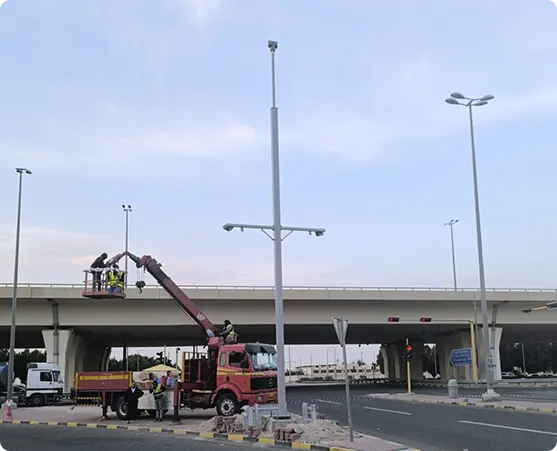
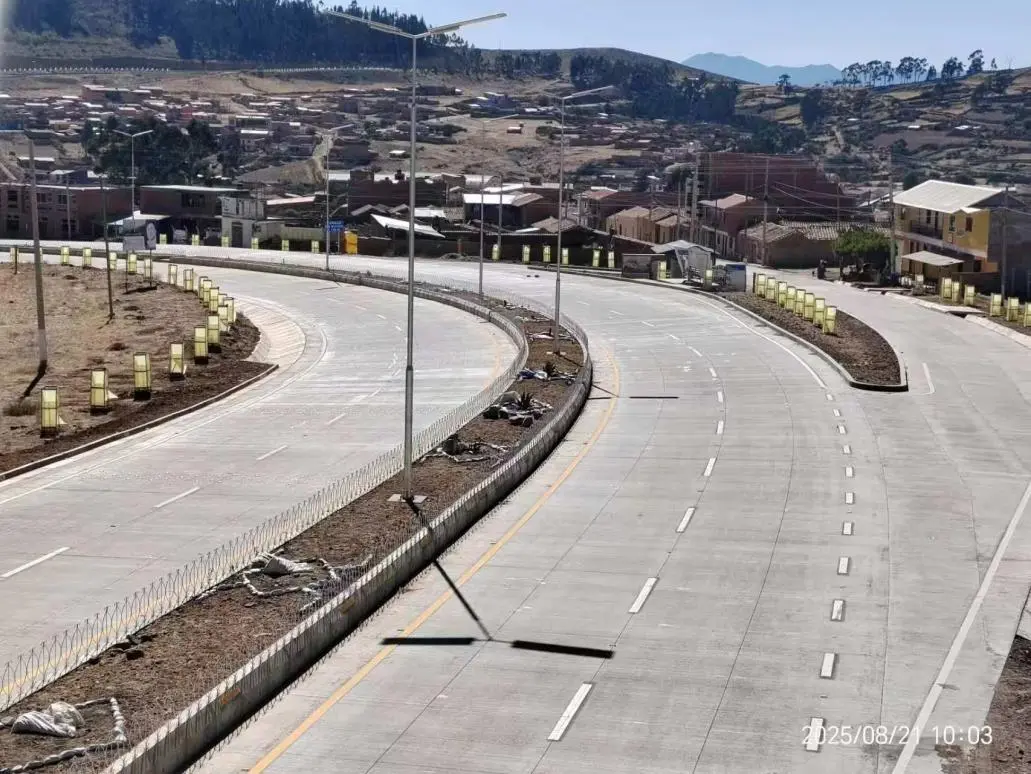
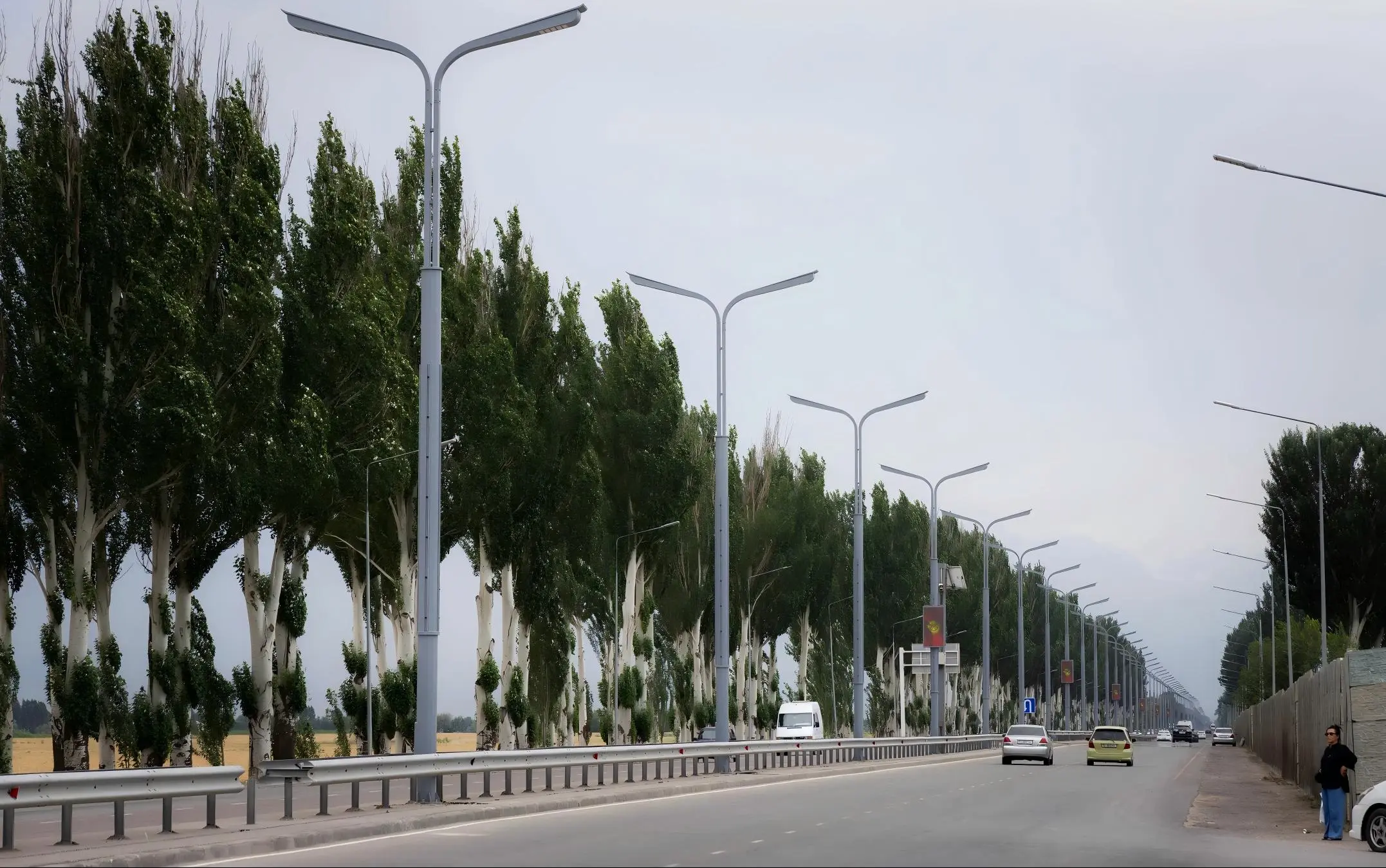
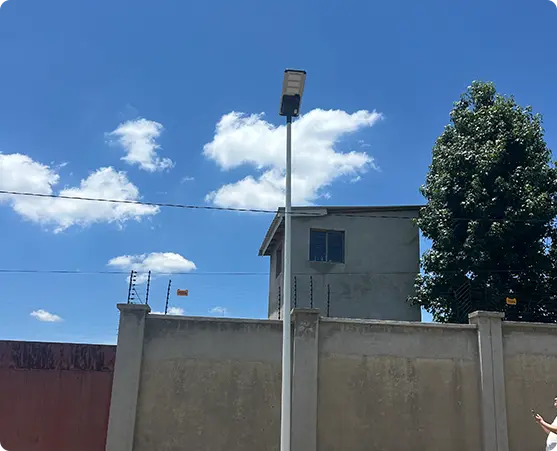
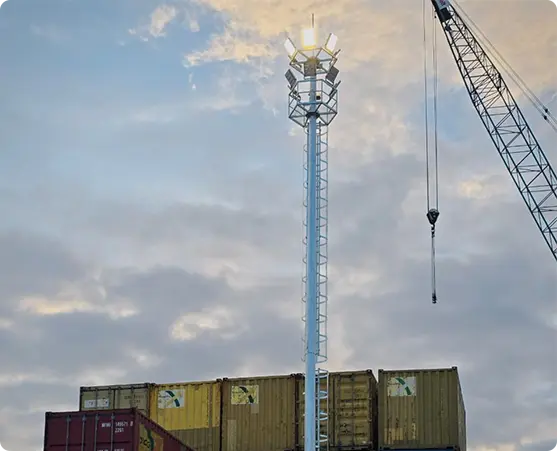
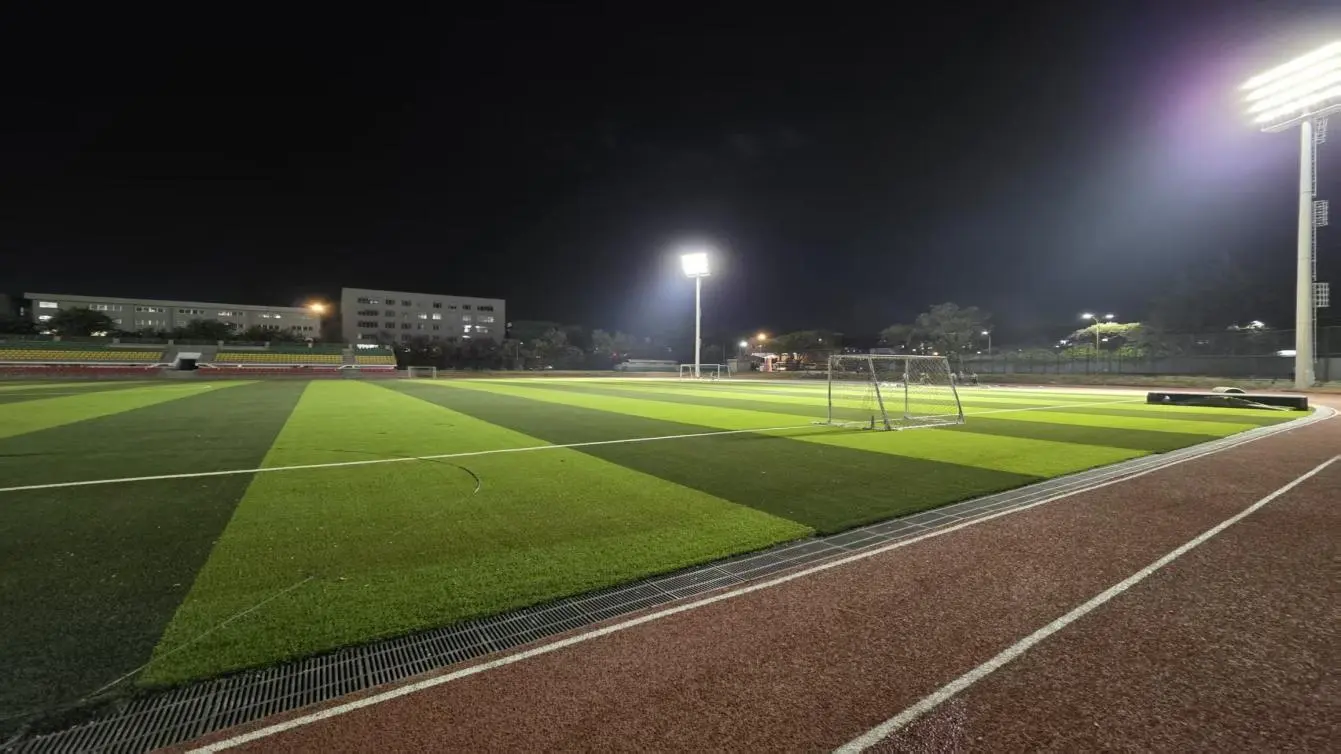
From hyper-arid Middle Eastern deserts to high-salinity equatorial maritime terminals, our bespoke configurations solve localized climate challenges.
Engineering Selection Guide: System Architectures & BOM Sizing
A reference matrix for consulting engineers and municipal procurement officers comparing system configurations against site parameters.
| System Architecture | Typical Height | PV Module Specs | Battery Chemistry | Wind Rating | Recommended Road Class | Key Economic Advantage |
|---|---|---|---|---|---|---|
| Integrated All-in-One (e.g., XT-YTH-3) | 4m – 7m | 60W – 120W N-Type Monocrystalline | Internal LiFePO4 (12.8V 30-60Ah) | Up to 45 m/s | Class M4 / M5 (Rural, Residential, Campus) | Lowest installation labor; 15-minute quick mount; zero cabling |
| High-Output All-in-One (e.g., XT-YTH-9) | 6m – 9m | 120W – 200W High Density PV | Internal LiFePO4 (25.6V 40-80Ah) | Up to 50 m/s | Class M3 / M4 (Collectors, Urban Parks, Industrial) | Self-contained design; multi-angle bracket; configurable dimming |
| Split-Type System (e.g., XT-DT-1) | 8m – 12m | 200W – 450W External Adjustable | External Pole/Underground LiFePO4 | Up to 60 m/s | Class M1 / M2 (Highways, Arterial Avenues) | Independent tilt for higher latitudes; deep 5+ day autonomy capacity |
| Multifunctional Smart Pole System | 6m – 12m | Hybrid Solar / Low-Voltage Grid | Centralized Modular Lithium Rack | Up to 55 m/s | Smart City Corridors, Pedestrian Plazas | Houses CCTV, 5G Micro-cells, EV chargers, and environmental sensors |
| Polygonal High-Mast System (15m-40m) | 15m – 40m | Centralized Commercial Array or Grid | Industrial Battery Bank or Utility Backup | Up to 65 m/s | Airports, Seaports, Rail Yards, Stadiums | Expansive optical coverage; motorized lowering ring for easy servicing |
Technology Roadmap: The Next Era of Off-Grid Photometrics (2026–2030)
Strategic hardware evolution addressing cell conversion ceilings, sub-zero battery storage chemistry, and autonomous IoT lighting telemetry.
N-Type TOPCon & HJT Integration
Phasing out older P-type PERC cells in favor of N-type TOPCon and Heterojunction (HJT) wafers. These provide >24.5% module efficiency, lower annual degradation (<1% Year 1, <0.4% thereafter), and an improved temperature coefficient (-0.30%/°C) for tropical climates.
Sodium-Ion Chemistry for Cold Climates
To eliminate sub-zero thermal degradation in Northern and Central Asian markets, we are piloting Sodium-Ion (Na-ion) battery banks. Na-ion cells maintain up to 85% capacity discharge at -30°C without auxiliary battery heating jackets.
AI-Driven MPPT & Dynamic Dimming
Next-generation firmware deploys localized neural algorithms. By predicting cloud cover from rolling 72-hour barometric trends, systems adjust lux output along municipal transit corridors, extending autonomy reserves during unseasonal rain.
Circular Economy & Steel Traceability
Integrating certified low-carbon recycled scrap into our EAF (Electric Arc Furnace) steel procurement lines. Every pole batch links to digital carbon footprints and QR-coded mill certificates for European ESG tender compliance.
International Structural Compliance & Rigorous Quality Assurance
Engineered to withstand rigorous international structural, electrical, and surface durability standards for global project tenders.
Structural Steel Standards (EN 40 & AASHTO)
Every shaft is modeled against AASHTO Standard Specifications for Structural Supports for Highway Signs and EN 40-3 design codes. Finite element analysis calculates wind-induced oscillations, drag coefficients, and base-flange stress concentrations under localized gust ratings.
Hot-Dip Galvanizing (ISO 1461 / ASTM A123)
Post-fabrication full-immersion baths ensure molten zinc chemically bonds with internal and external steel walls. We maintain coating thicknesses between 86μm and 110μm, delivering verified 25+ year corrosion protection in harsh atmospheric environments.
Electrical & Battery Safety Protocols
Battery packs feature multi-stage smart BMS controllers protecting against overcharge, deep discharge, short-circuit, and thermal runaway. Fully certified to UN38.3, IEC 62619, IEC 62133, and CE/RoHS directives for global maritime and air freight compliance.
Frequently Asked Questions: Factory Quotations & Engineering Specs
Detailed technical answers for EPC tendering teams, procurement directors, and municipal consulting engineers.
Are you a manufacturing factory or a trading company?
Xintong is an original equipment manufacturer (OEM/ODM). Founded in 1999, we operate an expansive 100,000 m² production complex in Gaoyou, Jiangsu Province, China. Our facilities feature 7 full-stack production lines encompassing steel sheet leveling, CNC shearing, single-pass tandem press brake bending, longitudinal submerged-arc welding, automated hot-dip galvanizing, electrostatic powder finishing, and cleanroom SMT luminaire assembly. International clients are welcome to perform on-site factory audits or schedule third-party inspections (e.g., SGS, TÜV, Bureau Veritas).
What specific engineering parameters are required to receive an accurate project quotation?
To deliver an auditable BOQ quotation, our engineering team requires: (1) Target road classification or required lux/foot-candle levels; (2) Road cross-section geometry, including lane counts, median widths, and setback distances; (3) Project site coordinates or historical solar insolation levels (kWh/m²/day); (4) Maximum localized design wind velocity (m/s or km/h); (5) Required continuous autonomy days (typically 3 to 5 rainy/overcast days); and (6) Pole structure preferences (conical, octagonal, or cylindrical with single or double arm configurations).
Which international quality standards and testing certifications govern your production?
Our street lighting poles and systems conform to European (EN 40-2, EN 40-3, EN 40-5), American (AASHTO LTS, ASTM A123, ASTM A572), and international ISO 9001:2015, ISO 14001:2015, and ISO 45001 safety frameworks. Optical luminaires and solar electronics comply with CE-LVD, CE-EMC, RoHS, CB, IEC 60598, IEC 61215, IEC 61730, and IP66/IK10 ingress/impact testing standards. We provide certified Mill Test Certificates (MTC) and zinc bath immersion records with every export container.
How does Xintong guarantee structural corrosion resistance over 25+ years?
We utilize high-yield structural steel (Q235B and Q355B). After forming and robotic welding, every shaft undergoes chemical pickling to remove surface scale before complete immersion in a molten zinc kettle maintained at 450°C. This creates metallurgical zinc-iron alloy layers on both interior and exterior surfaces with a minimum average thickness of 86μm. For coastal deployments, an additional electrostatic thermoset TGIC polyester powder coat (80–120μm) is baked on, providing robust protection in C5-I and C5-M high-salinity marine environments.
Do you provide complete engineering submittal dossiers for international tenders?
Yes. We regularly support EPC contractors bidding on World Bank, Asian Development Bank, and national municipal tenders. We provide full submittal packages including photometric DIALux files, 3D luminaire models, CAD foundation and anchor-bolt layout schematics, structural finite-element wind deflection calculations, battery discharge curves, and warranty documentation up to 10 years depending on selected component tiers.
High-Spec Lighting Poles, Split Arrays & Smart Columns
Explore our core engineering catalog designed for municipal highways, urban expressways, and landscape architecture.




Request a Certified Project Quotation
Connect directly with our export engineering department. Skip intermediary markups and work directly with senior structural and photometric engineers who prepare bid-compliant proposals for public tenders.
- Photometric DIALux calculation model (.evo file)
- CAD foundation, flange base plate & anchor-bolt layout
- Wind-load structural calculation report (AASHTO/EN standard)
- Itemized FOB/CIF commercial BOQ quotation sheet